Showing posts with label ink squeeze. Show all posts

Friday, November 19, 2021

1895 1d Burelé band Ink Squeezes

The 1895 1d Burelé band issue, like most of the Sideface issues, has a number of additional lines or ink marks outside the frame. These are known as reglet flaws or ink squeeze. They appear to have developed when, in setting up the plate with the 30 moulds, damage occurred when levering them into the correct position. 

Because ink squeezes occurred when creating the plate, they are constant flaws and can be used to assist in plating this issue. To illustrate this I have analysed positions 1 and 10 at the top of the sheet. I have used a control stamp from two blocks in my possession for both positions and then compared them with 4 other examples from 4 sheets in my possession

Position 1
Position 1 on the sheet showing 4 instances of ink squeeze:
1. Protruding squeeze above the frame at top LH corner
2. Protruding squeeze below the frame at bottom LH corner
3. Line of ink across the entire length of the LHS of the frame progressively showing a white space in-between as it descends the frame
4. A triangle of ink above and to the right of the top RHS corner

Composite of 4 different copies of position 1 from sheets in my collection showing the same 4 ink squeezes. Note that depending on the positioning of the perforation holes some ink squeeze characteristics can be obscured

Position 10
Position 10 on the sheet showing 1 instance of ink squeeze:
1. A triangle of ink protruding diagonally from the right of the  top RHS corner

Composite of 4 different copies of position 10 from sheets in my collection showing the same ink squeeze

Major Ink Squeezes on the sheet
There are only a handful of prominent ink squeezes to be found on this sheet (positions 1, 2, 11 and 21) as well as some minor ones

L-R, position 1, 2, 11 and 21

This table shows the various positions where ink squeezes are found on the sheet
(LT = Left Top of the stamp, LB = Left Bottom, TL = Top Left, TR = Top Right, RT = Right Top, RB = Right Bottom, BL = Bottom left and BR = Bottom Right of the stamp)

Description of the Individual stamp characteristics (Italics indicates a significant identifying characteristic). Position no: 

1 - Extensive ink squeeze on left hand side of frame joined at the top and separating towards the bottom 

2 - Ink triangle above and to the left of the top left-hand corner

Ink squeeze at the top right-hand corner and separate from it

Ink squeeze in the upper quadrant of the right-hand side of the frame and separate from it 

3 - Faint Ink squeeze dot above top right-hand corner

4 - Irregular Ink squeeze thickening of top frame most noticeable at the beginning of the left and at the end of the right

6 - Small excrescence of Ink squeeze protruding from the frame on the top right-hand corner 

7 - Small thickening of the outer frame line due to Ink squeeze on the top right-hand side

8 - Slight thickening of the outer frame line due to Ink squeeze and most pronounced on the top right-hand side

10 - Faint Ink squeeze dot above top left-hand corner

Ink squeeze elongation extending from the top right-hand corner

11 - Extensive ink squeeze on left hand side of frame separated and extending above the frame at the top and joining towards the bottom but ending just before

21 - Prominent ink squeeze on left hand side of frame close at the top and separating and becoming irregular and dashed before petering out in line with the bottom of the ornament

31 - Very faint Ink squeeze line above top left-hand corner

61 - Thin dashed ink squeeze line on left hand side of frame petering out in line with the bottom of the ornament

80 - Vertical thin ink squeeze line on the outside of the left-hand side frame towards the bottom

81 - Thin dashed ink squeeze line on left hand side of frame petering out in line with the bottom of the spandrel

91 - Thin vertical short ink squeeze line to the left and above the top left-hand side of the spandrel

101 - Slight thickening of the outer frame line due to Ink squeeze on the upper left-hand side

120 - Ink squeeze dot below and to the right of the bottom right-hand corner 

Top row; Positions 1-4, 6-8. Middle row: Positions 10, 11, 21, 31, 61, 80, 81. Bottom row: Positions 91, 101, 120

Wednesday, November 7, 2012

Queensland 2nd Sideface Reglet flaws (Frame Flaws)

The 2nd sideface issues exhibit a number of frame flaws.

Where there are additional lines or ink marks outside the frame these can be caused by reglet flaws or "ink squeeze". They are not compartment lines, which only occur on prints from plates made by the Perkins Die and Mill process, namely the Australian 1914 1d. and the New Zealand 1909 Dominion 1d.

A "reglet flaw" is a line appearing in colour in the margin of the stamp and caused by the reglet working up to printing height, being inked, and depositing ink on the paper.

Reglet flaws can occur only in cases in which the printing base consists of several or many separately mounted electrotypes clamped together by pressure to make the form.

"Reglet" is the printer’s term for a strip of wooden furniture, or sometimes a strip of metal, for spacing; reglets are used between the individually mounted electrotypes to keep their subjects the required distance apart. Usually the reglets are below printing height, and should remain there throughout the printing, locked in position in the form by the pressure applied by printers’ furniture and quoins. 


So the electrotypes should be held tightly in the chase by means of wedges or reglets, thin wedges of wood that were normally hammered down below type height and therefore did not print. Sometimes however the stress on the chase during printing caused a reglet to rise and reach type height. It would then receive ink and print as a thick line.

Reglet flaws are only found on the outside of electrotypes. Usually the flaws produced by a reglet have individual characteristics and this may assist in plating. However, when a reglet flaw occurs, it does so after the form has been at press for some time. As a result, identically positioned stamps from the same printing may be found without and with a reglet flaw, and sometimes with a flaw that progressively increases in length.

"Ink squeeze" is the term used by printers to designate small accumulations of excessive ink along the edges of a line caused by the ink roller depositing ink not only on the surface but also slightly over the edge of each relief line or area on the printing base.

Ken Scudder in Queensland Postage Stamps 1879 - 1912, p. 185, has a different take, describing these lines as follows:


"These lines originate from the lead moulds not having been cleaned up. In stamping the lead moulds fine amounts of lead are squeezed out. These would normally be cleaned off before the moulds were placed in the electroplating bath. This does not appear to have occurred to many of the moulds from which the plate electros were produced. Neither would it seem were some of the resulting electros cleaned up thus leaving the squeezes to print."

If Scudder is correct then these lines should be plateable. I would imagine that both types of ink squeezes occurred.

Whatever the reason, these are not caused by damage to the plate or the stamp.

Examples can be found for the various issues here:


Queensland 1 shilling Reglet Flaws (Frame Flaws)

This issue, like all the sideface issues, has a number of frame flaws, although they are relatively uncommon for the 1 shilling issue. For further information on compartment lines and frame flaws for the Queensland 2nd sideface issues, see here.

Here are some examples on the Queensland 1 shilling stamp.


 Frame line on top left side

 Frame mark at bottom left

 Frame line at top left hand side

  Frame line at top left hand side

  Frame mark at bottom left hand side

 Faint  frame line at top left hand side


  Frame line at left hand side

  Frame mark at bottom left hand side

  Frame line at top and bottom left hand side

  Frame line at top left hand side

  Frame line at top on the right

   Frame line at top on the left 

 Frame mark on top left and an ink blob on the upper left hand side

   Frame line at top on left hand side

  Frame line at bottom right hand side

Frame line on right hand side

Saturday, May 12, 2012

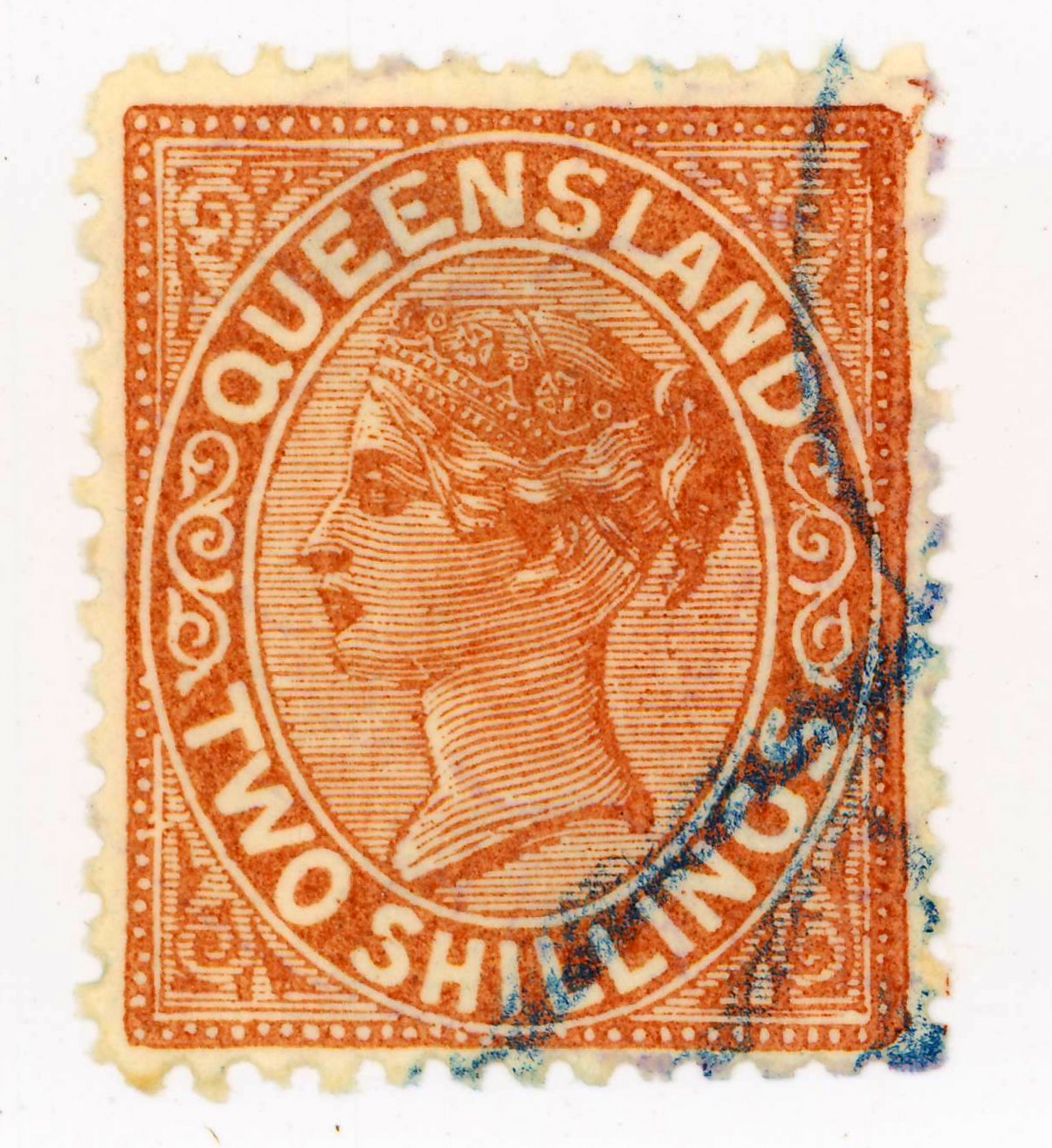
Queensland 2 shilling brown Reglet Flaws (Frame Flaws)

For further information on compartment lines and frame flaws for the Queensland 2nd sideface issues, see here.

Here are some examples on the Queensland 2nd Sideface 2 shilling stamp.

Lines on the upper right hand side and the bottom right hand side

Marks on the upper right hand side

A mangled  line  on the upper right hand side

Lines on the left hand side


Extensive  lines  on the left hand side

Lines on the upper left hand side